
Velvet vs Satin: What Is the Difference?

Carina Silk Editorial Team writes practical guides on silk fabrics, scarves and custom textile development, with a focus on materials, artwork, sampling, construction and finishing decisions.
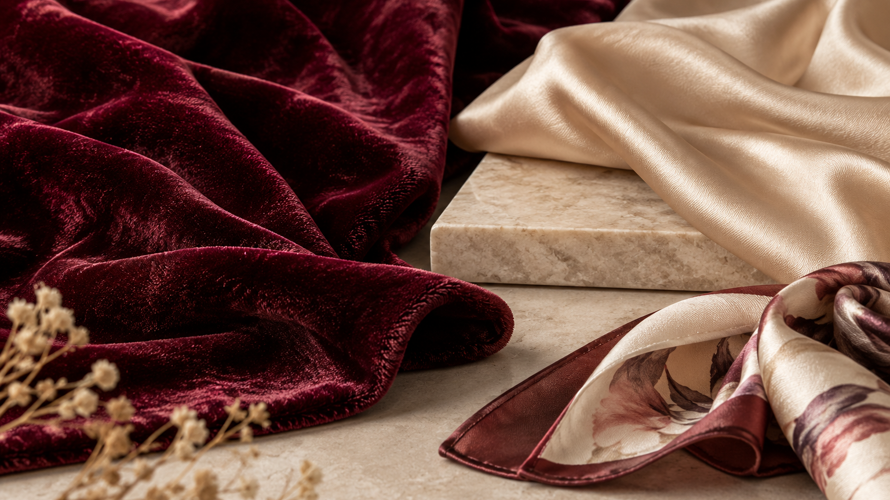
Velvet and satin are not simply two names for shiny luxury fabric. Velvet is defined by a raised pile surface; satin usually refers to a smooth surface or weave family with longer floats. The fibre can be silk, polyester, rayon or another material.
The satin guide explains why satin is not automatically silk. For a buyer, the key distinction is pile versus smooth face, then weight, nap, drape, care and the finished product.
What Is the Difference Between Velvet and Satin?
Velvet has a cut or looped pile that creates depth, softness and directional light. Satin has a smooth face created by its weave or surface arrangement and often reflects light more evenly.
A velvet or satin name does not identify fibre. Silk velvet, polyester velvet, silk satin and polyester satin can all exist with different price, care, weight and performance.
Use silk types and the fabric composition guide to keep fibre, construction and surface as separate specification fields.

How Are Velvet and Satin Made?
Velvet construction creates a pile that is cut or controlled to produce a raised surface. The pile direction, density and height affect shade, hand, crushing and cutting.
Satin construction uses longer floats or a smooth finished face. Weaving, fibre form, density and finishing affect lustre, slip, drape and snag behaviour.
Dyeing, printing, pressing, seam handling and packing can change both surfaces. A finished sample is especially important because lighting and handling can hide or exaggerate differences.
What Velvet and Satin Directions Should Buyers Compare?
Define both surface and fibre before choosing the product direction.
| Direction | Textile character | Potential fit | What to confirm |
|---|---|---|---|
| Silk velvet | Natural fibre with raised pile | Luxury apparel and accessories | Pile, nap, weight and care |
| Polyester velvet | Synthetic pile fabric | Cost or easy-care programs | Hand, crushing and static |
| Silk satin | Silk fibre with smooth reflective face | Premium scarves and fashion | Slip, weight and care |
| Polyester satin | Synthetic satin surface | Uniforms, linings and accessories | Heat, static and hand |
| Stretch velvet or satin | Elastane or knit component | Close-fit products | Recovery and growth |
| Printed or patterned surface | Artwork applied to a directional base | Decorative products | Registration and surface direction |
Velvet vs Satin: Which Is Better?
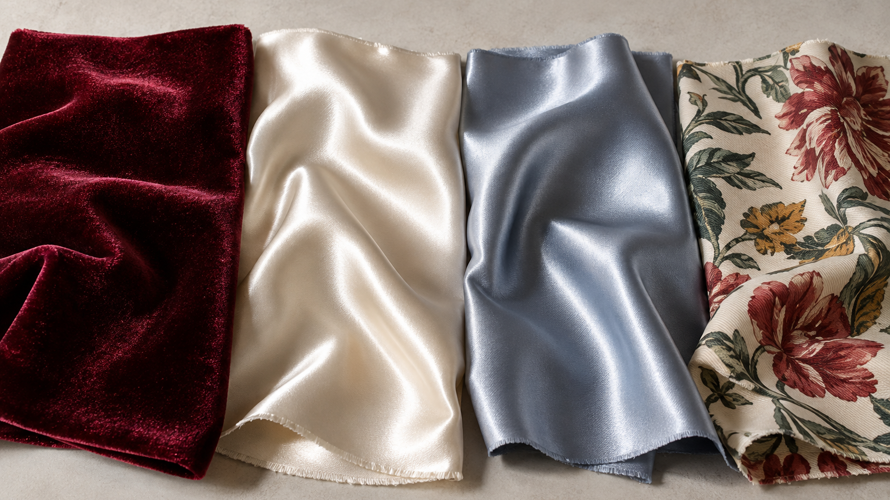
Velvet offers pile, depth and a softer visual surface; satin offers a smoother face, sliding highlight and fluid movement. Neither is automatically better because the end use may require grip, structure, easy care or a particular print result.
For a scarf, compare velvet with silk satin and silk twill by hand, slip, fold, opacity, bulk, edge and care.
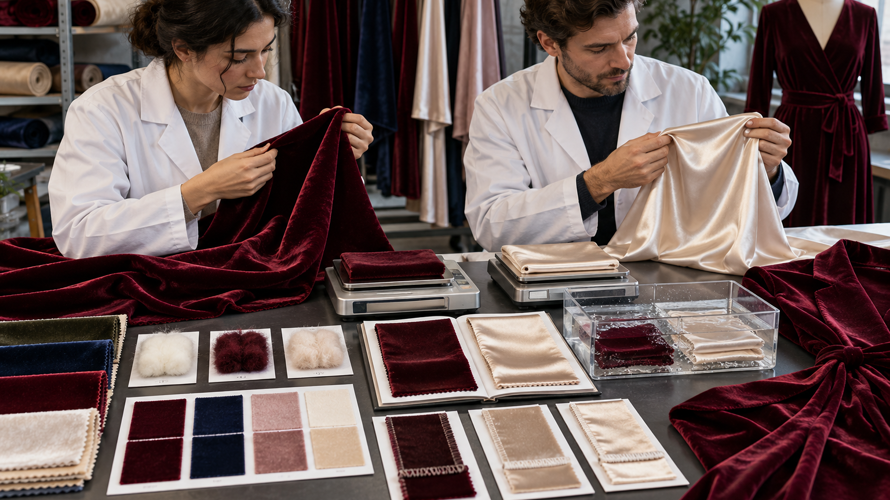
A reference image is not enough. Review the actual surface direction under the intended lighting and wearing method.
What Should Buyers Check in Velvet or Satin?
Surface direction and finished handling are central to approval.
Fibre and Construction
Confirm silk, polyester, rayon, blend, woven or knitted base and the actual surface structure.
Pile or Float
Check pile height, density, nap, float, lustre, pressure marks and surface consistency.
Weight and Drape
Record GSM or weight, width, bulk, drape and fold behaviour for the finished use.
Colour and Artwork
Approve shade, light response, nap direction, print registration, reverse and border placement.
Cutting and Edge
Test nap layout, seam, hem, fray, curling, pile crush and handling during production.
Care and Packing
Test pressing, washing, storage, compression and recovery before approving the packing route.
| Check | Why it matters | Possible risk | Evidence to request |
|---|---|---|---|
| Surface | Controls appearance | Wrong nap or float | Surface sample |
| Fibre | Controls care and claims | Silk assumed from shine | Composition |
| Weight | Controls drape and bulk | Wrong product hand | Weight record |
| Colour | Controls directional shade | Lot or nap variation | Colour standard |
| Edge | Controls finish | Pile damage or fray | Hem sample |
| Care | Controls service life | Crush or shine marks | Care trial |
Where Are Velvet and Satin Used?
Velvet is used in apparel, eveningwear, interiors, accessories and decorative products. Satin is used in scarves, linings, formal products, uniforms, fashion and gifting.
For a printed scarf, compare silk twill with satin when the brief needs definition, body or a smoother face. Velvet may be unsuitable when a flat printed image or low bulk is essential.
Select the surface that supports the product’s touch, movement, lighting and care requirements.

How Should Velvet or Satin Be Specified?
State fibre, construction, pile or float, weight, width, nap direction, colour, print route, edge, care, packing and finished dimensions.
Attach a finished swatch and a sample handled under the intended lighting. For velvet, mark the nap direction on the technical pack.
Frequently Asked Questions
What is the main difference between velvet and satin?
Velvet has a raised pile surface, while satin usually has a smooth face or weave family with a reflective surface.
Is velvet always soft?
Velvet often feels soft because of its pile, but fibre, pile density, finish and construction affect the hand.
Is satin always silk?
No. Satin describes a surface or weave direction and can be made from silk, polyester, rayon or other fibres.
Which is better for scarves, velvet or satin?
Choose based on bulk, grip, drape, shine, warmth, artwork, edge and care.
Does velvet have a nap?
Many velvet qualities have a directional pile or nap that changes the shade and light response when reversed.
Is satin more slippery than velvet?
A smooth satin face can be more slippery, while velvet pile can provide more surface grip, but the exact fabric should be tested.
What should a buyer request?
Request fibre, surface construction, weight, width, colour, edge, care and a finished sample under intended lighting.
Conclusion
Velvet is a pile direction and satin is a smooth-surface or weave direction. Separate the surface from fibre, then approve weight, light response, edge, care and finished use.
