What Is Oxford Fabric? Basket Weave, Materials, Coatings and Buyer Checks

Carina Silk Editorial Team writes practical guides on silk fabrics, scarves and custom textile development, with a focus on materials, artwork, sampling, construction and finishing decisions.
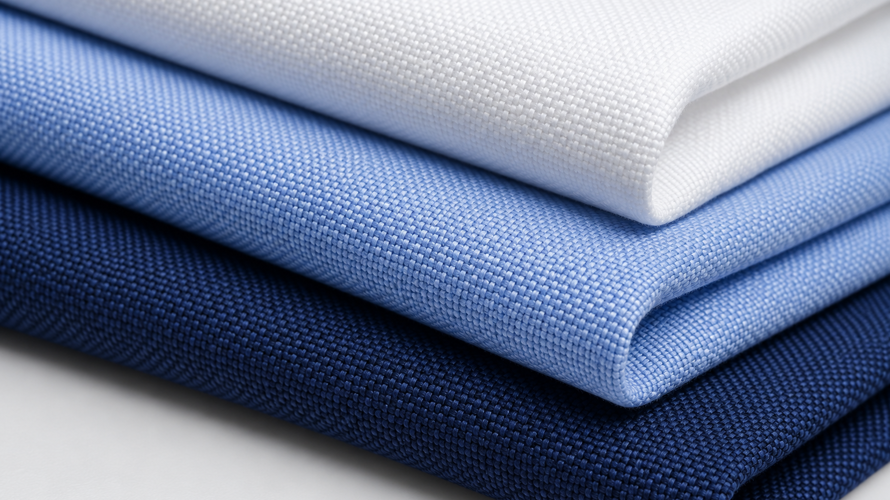
Oxford fabric is a woven fabric family commonly associated with a basket-weave or basket-weave variation. It is not one fixed fibre: cotton Oxford shirting, polyester Oxford and nylon Oxford can have very different hand and performance.
For a buyer, Oxford should be specified through material, yarn size or denier, density, GSM, width, coating and end use. The construction name is a starting point, not a finished specification.
What Is Oxford Fabric?
Oxford often uses paired or grouped yarns in a basket-style variation of plain weave. A weaving reference shows Oxford as a plain-weave variation, but suppliers may use the name across several weights and material families.
Compare Oxford with woven fabric structure and record fibre separately using the composition guide. Cotton Oxford for shirts is not interchangeable with coated Oxford for bags.
Coatings such as PU or PVC may change water resistance, stiffness, hand and care. Treat the coating as a separate specification field.
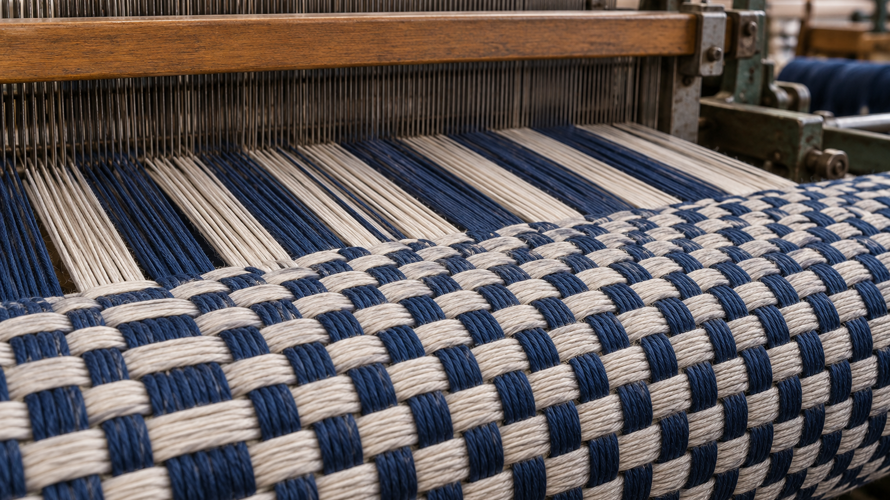
How Is Oxford Fabric Made?
Yarns are selected and arranged in warp and weft, often with a paired or grouped construction that creates the characteristic basket texture. Fibre and yarn size determine much of the surface and strength.
The woven cloth may be dyed, printed, calendared, coated or laminated. The finish changes handle, flexibility, abrasion, water resistance and repair behaviour.
Approve a physical swatch and finished product because a coated roll can cut, sew and fold differently from the uncoated base.
What Are the Main Oxford Fabric Types?
Use fibre, yarn size, density and finish to distinguish Oxford qualities.
| Direction | Textile character | Potential fit | What to confirm |
|---|---|---|---|
| Cotton Oxford | Soft basket-weave shirting direction | Shirts, apparel and light products | Cotton yarn, density and finish |
| Polyester Oxford | Synthetic woven quality with broad weight range | Bags, covers and practical products | Denier, GSM and coating |
| Nylon Oxford | Light, strong synthetic woven quality | Outdoor and technical products | Denier, abrasion and finish |
| Pinpoint Oxford | Finer yarn and more refined basket texture | Dress shirts and premium apparel | Yarn size, hand and lustre |
| Coated Oxford | Woven base with PU, PVC or other finish | Water-resistant bags and covers | Coating, flex, hydrostatic result and care |
| Lightweight Oxford | Lower denier or density for reduced bulk | Linings and light accessories | Opacity, tear and seam behaviour |

Oxford vs Canvas: What Is the Difference?
Oxford and canvas can both be woven and durable, but they usually signal different construction and weight directions. Oxford often uses a basket-style surface and can range from shirting to coated goods, while canvas generally signals a firmer, robust fabric family.
Compare them by warp and weft, fibre, yarn size, density, GSM, coating, hand, stiffness and intended load. Names alone do not guarantee water resistance or abrasion performance.
Choose the quality that meets the product test. A lighter Oxford can be appropriate for a lining, while a heavy coated canvas may be better for a structured bag.
What Should Buyers Check in Oxford Fabric?
Oxford selection should be tied to construction and end-use evidence.
Fibre and blend
Confirm cotton, polyester, nylon or blend content and the intended label wording.
Denier and yarn
Record yarn size, filament or spun direction and any paired-yarn construction.
Density and GSM
Control body, strength, opacity, yield and product weight.
Coating and finish
Define coating type, thickness, flex, water response, odour and care.
Colour and abrasion
Approve colour, rub, pilling, surface and repeated-use behaviour.
Finished product
Inspect cutting, sewing, edge, load, packaging and real-use performance.
| Check | Why it matters | Possible risk | Evidence to request |
|---|---|---|---|
| Material | Controls hand and care | Shirting and outdoor terms mixed | Composition statement |
| Denier | Controls yarn scale | Wrong body or strength | Yarn specification |
| Density | Controls structure | Coverage or yield mismatch | GSM and construction |
| Coating | Controls water and flex | Cracking or peeling | Finish data |
| Abrasion | Controls service life | Surface failure | Defined test |
| Finished item | Confirms application | Roll misleads | Approved product |
Where Is Oxford Fabric Used?
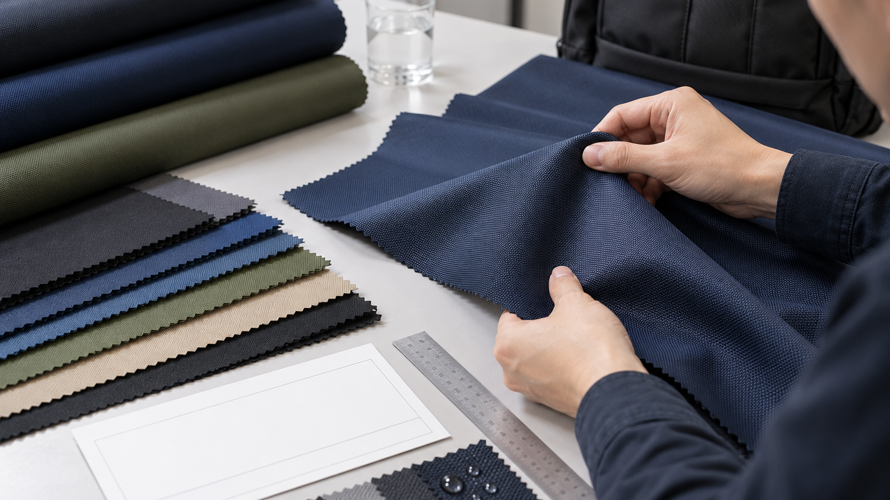
Oxford fabric is used in shirts, apparel, bags, backpacks, covers, outdoor products, linings and accessories. The exact use depends on fibre, denier, density and coating.
For a printed or lighter accessory, compare Oxford with plain weave or twill by hand, drape, opacity, print, stiffness and edge.
Select coated Oxford only when the finish supports the required water, flex and care conditions.
How Should Oxford Fabric Be Specified?
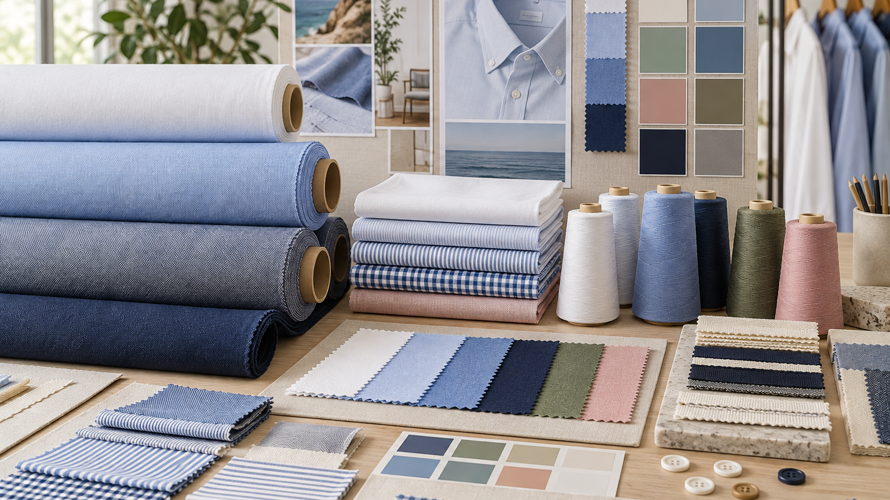
State fibre and blend, yarn or denier, Oxford construction, GSM, width, density, coating, colour, care, abrasion or water test, and end use. Link the record to the fabric weight guide.
Attach a fabric swatch and finished product sample. For coated qualities, record the coating side, thickness or performance requirement and folding conditions.
Frequently Asked Questions
What is Oxford fabric?
Oxford is a woven fabric family commonly associated with a basket-weave or basket-weave variation. Fibre, weight and finish can vary.
Is Oxford fabric waterproof?
Some Oxford fabrics are coated for water resistance, but Oxford itself does not automatically mean waterproof.
What is Oxford fabric made of?
It may be cotton, polyester, nylon or a blend. Confirm the generic fibre content.
What is the Oxford weave?
It is commonly described as a basket-style variation of plain weave using paired or grouped yarns.
Is Oxford fabric durable?
Durability depends on fibre, yarn, density, coating, abrasion and the finished application.
What is the difference between Oxford and canvas?
They are different fabric directions. Oxford often signals a basket-style construction, while canvas usually signals a firmer robust woven family.
What should an Oxford buyer request?
Request composition, denier, construction, GSM, width, coating, colour, testing, care and a finished sample.
Conclusion
Oxford is a construction family whose behaviour changes with fibre and weight. Specify yarn or denier, density, GSM, coating, care and finished-use evidence before approval.