
How Is Silk Made into Fabric? From Cocoon to Finished Textile

Carina Silk Editorial Team writes practical guides on silk fabrics, scarves and custom textile development, with a focus on materials, artwork, sampling, construction and finishing decisions.
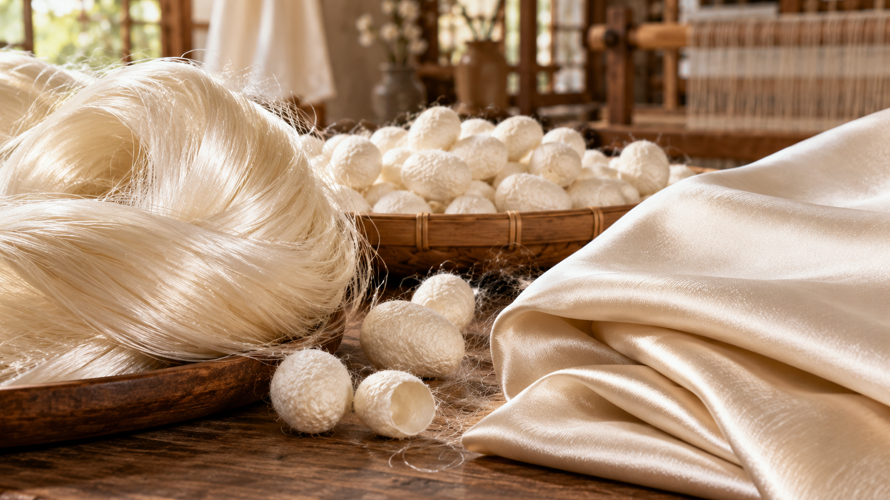
Silk fabric is made by converting silk filament or spun silk into yarn, then building a textile through weaving or another construction route, followed by dyeing, printing and finishing. The route from cocoon to cloth is not one single step: each stage changes the final hand, lustre, drape, strength and appearance.
For a buyer, the useful story is process-specific. Confirm the silk source or category, yarn, weave, weight, width, surface, colour route, finishing and finished sample instead of approving a generic “silk” description.
How Is Silk Made into Fabric?
Most premium silk starts with filament from a cocoon. Filaments may be reeled together, thrown or otherwise processed into yarn; shorter fibres can be spun into a different yarn direction.
The resulting fabric may be a silk twill, satin, chiffon, plain weave or jacquard. The silk fabric types guide helps separate fibre family from construction and surface.
A finished silk label should be supported by the composition guide and the actual product record. Fibre identity does not specify weave, weight or print route.

What Are the Main Steps from Cocoon to Silk Fabric?
Cocoons are prepared and filament is reeled or otherwise recovered. A silk production reference describes subsequent steps including throwing, dyeing, loom preparation and the interlacement of warp and weft.
Yarn is sized, warped and woven or knitted into the intended structure. Weave selection changes the surface, opacity, body, drape and reverse-side appearance.
The cloth is then scoured, dyed, printed, finished, inspected and cut. For custom work, approve the process through a fabric swatch, print strike-off and finished sample.
Which Silk Fabric Directions Come from the Process?
The fibre route is only the beginning. Yarn, weave and finishing create the product the buyer handles.
| Direction | Textile character | Potential fit | What to confirm |
|---|---|---|---|
| Silk plain weave | Balanced interlacement with a relatively even surface | Light scarves, linings and apparel | Density, opacity and finish |
| Silk twill | Diagonal weave with more defined body | Printed scarves and structured accessories | Twill angle, weight and print |
| Silk satin | Smooth face with longer floats | Formal and fluid luxury products | Slip, snag risk and care |
| Silk chiffon | Light, open and airy construction | Layered scarves and sheer products | Opacity, seam and edge |
| Silk jacquard | Pattern formed through loom-controlled structure | Patterned premium textiles | Float, repeat and reverse |
| Spun silk | Shorter fibres converted into spun yarn | Matte or textured products | Yarn character and pilling |
Raw Silk, Silk Yarn and Silk Fabric: What Changes?
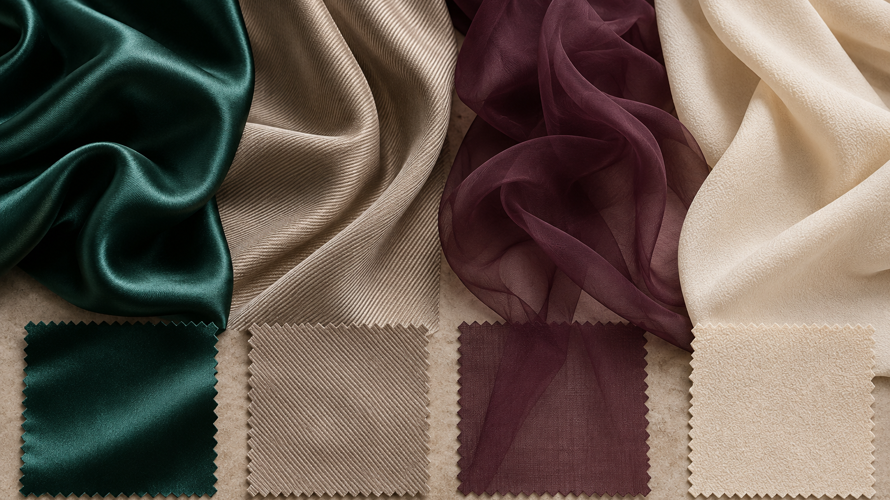
Raw material, yarn and fabric are different stages. A silk filament can become a smooth yarn, while spun silk can create a different hand. The weave and finish then add another layer of product behaviour.
Compare the finished textile with satin, twill or chiffon by weight, width, opacity, drape, surface, print and care. A supplier’s fibre statement alone cannot predict the final appearance.
For a product brief, describe the stage that matters to the customer: fibre content, construction, finish and finished use.
What Should Buyers Check in Silk Fabric?
Connect every process stage to an approval record.
Silk identity
Confirm fibre wording, silk category, blend and supplier documentation.
Yarn
Record filament or spun direction, twist, count and any yarn-dyed requirement.
Weave and weight
Specify construction, momme or GSM, width, density and opacity.
Dye or print
Approve colour standard, artwork, registration, penetration, reverse and fastness.
Finish and edge
Review hand, lustre, coating, hemming, fray, seam or rolled edge.
Finished sample
Inspect the actual product after cutting, sewing, care and packaging.
| Check | Why it matters | Possible risk | Evidence to request |
|---|---|---|---|
| Fibre | Controls identity and claim | Generic silk wording | Composition record |
| Yarn | Controls hand and surface | Wrong filament direction | Yarn specification |
| Weave | Controls drape and body | Construction mismatch | Weave record |
| Weight | Controls coverage and yield | Thin or heavy result | Momme or GSM |
| Colour and print | Controls artwork result | Shade or registration error | Strike-off |
| Finished item | Confirms delivery | Swatch misleads | Approved sample |
Where Is Silk Fabric Used?
Silk is used in scarves, apparel, linings, sleep products, accessories, home textiles and premium printed goods. The best construction depends on the intended hand, drape, opacity, surface and care.
For a custom scarf, compare silk twill with silk satin or chiffon using the actual size, artwork, border, hem and packaging route.
A process-led specification helps a buyer avoid paying for a fibre name while receiving the wrong weave or finished surface.

How Should Silk Fabric Be Specified?
State silk or blend content, yarn direction, weave, momme or GSM, width, opacity, colour or print route, repeat, finish, hem, care and finished use. Use the fabric weight guide for a comparable weight record.
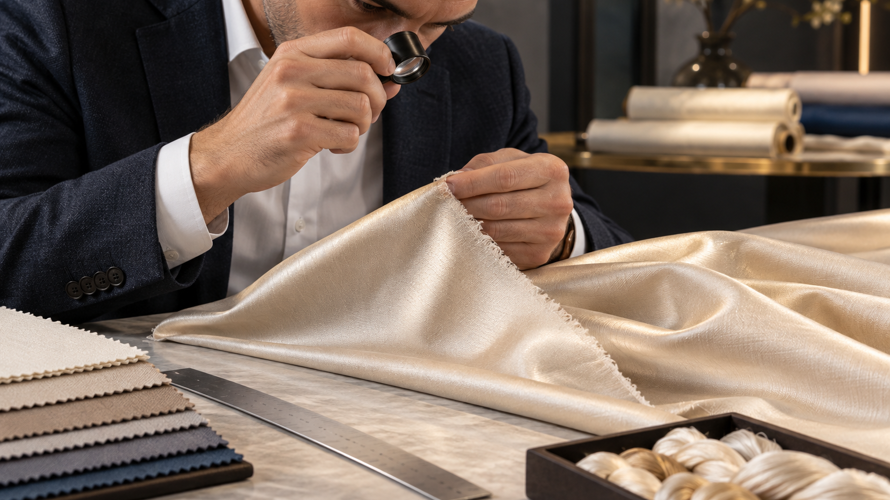
Attach a silk swatch, colour standard, strike-off and finished sample. Record which process stage each document proves.
Frequently Asked Questions
How is silk made into fabric?
Silk filament or spun silk is converted into yarn, then woven or otherwise constructed and finished through dyeing, printing, washing or other treatments.
What happens after silk is reeled?
The filament is processed into yarn, prepared for weaving or another construction, then converted into fabric and finished.
Is all silk fabric woven?
Many silk fabrics are woven, but the product should still be described by its exact construction rather than assuming from the fibre name.
What is the difference between silk twill and silk satin?
They use different weave directions, which change surface, body, drape, slip and print behaviour.
How is silk fabric dyed?
The route depends on the fibre preparation, yarn, fabric, colour target and finishing. Approve the actual dye or print result on a sample.
How do you check silk fabric quality?
Check composition, yarn, weave, weight, width, surface, colour, print, fastness, edge, care and finished sample.
What should a silk buyer request?
Request fibre and yarn details, construction, weight, width, colour or print records, finish, care and an approved finished sample.
Conclusion
Silk becomes a finished fabric through a chain of choices. Control fibre and construction, yarn, weave, weight, colour, finish, care and the finished sample before approval.
