
Rayon vs Polyester: Fibre, Feel, Care and Buyer Checks

Carina Silk Editorial Team writes practical guides on silk fabrics, scarves and custom textile development, with a focus on materials, artwork, sampling, construction and finishing decisions.
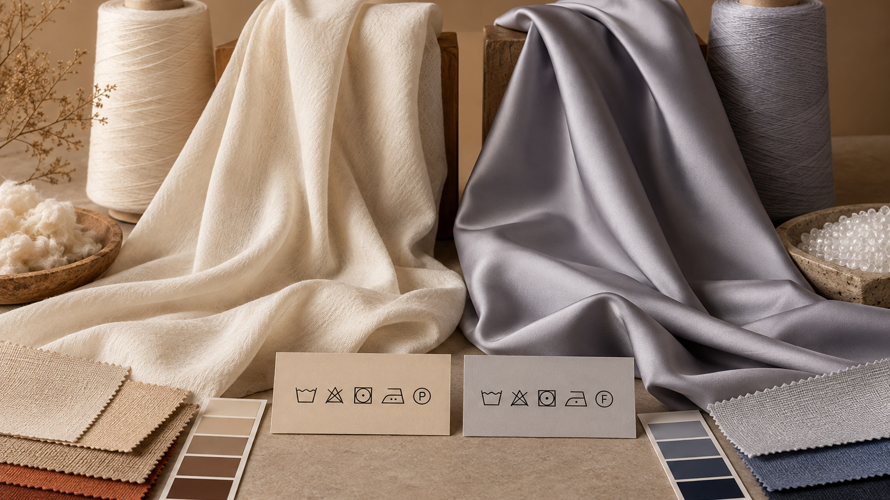
Rayon and polyester are different manufactured fibre directions. Rayon is generally associated with regenerated cellulose, while polyester is a synthetic polymer fibre. The finished fabric can still vary widely because yarn, weave or knit, weight, finish and blend affect the result.
The rayon fabric guide and synthetic-fabric guide provide fibre context. Use this comparison to decide what must be tested rather than asking which fibre is universally better.
What Is the Difference Between Rayon and Polyester?
Rayon is made by regenerating cellulose into a fibre form. Polyester is a manufactured synthetic fibre formed from polymer chemistry. Their origins and fibre structures are different, but both can be spun, woven, knitted, dyed, printed and blended.
Rayon is often selected for a soft, fluid or absorbent hand, while polyester may be selected for strength, dimensional control, colour consistency, easy-care performance or cost. These are tendencies, not guarantees for every fabric.
A satin surface can be made from either fibre. Satin describes a weave or surface family, not the fibre. Confirm composition before making a silk or performance claim.

How Do Rayon and Polyester Become Fabric?
Rayon and polyester are converted into staple or filament yarns, then woven or knitted into the intended construction. Yarn form and finishing can make a rayon or polyester quality look smooth, matte, crisp, brushed or lustrous.
Rayon may require more careful wet handling in some constructions, while polyester can respond strongly to heat setting, disperse dyeing, static and surface finishing. The actual fabric must be tested after processing.
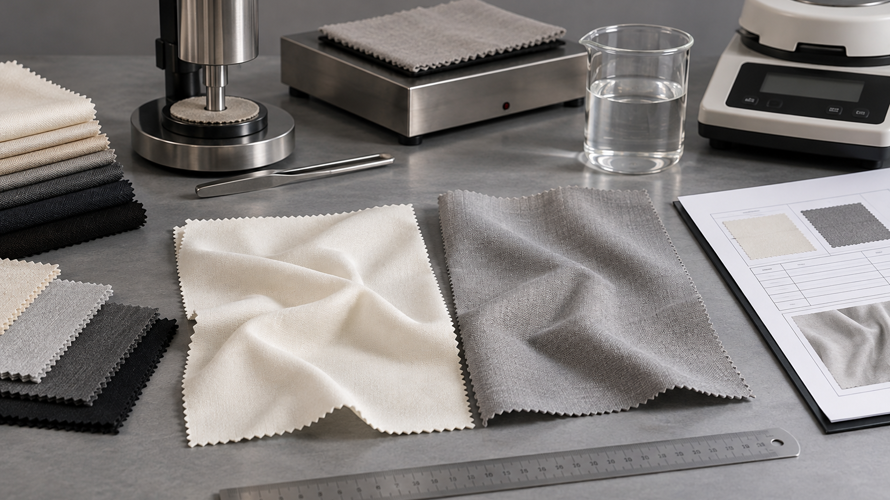
For a custom product, compare both on the same fabric swatch workflow and record weight, width, opacity, drape, print, care and edge.
What Rayon and Polyester Directions Should Buyers Compare?
The useful comparison is between finished qualities, not fibre names in isolation.
| Direction | Typical hand or behaviour | Potential fit | What to confirm |
|---|---|---|---|
| Rayon woven | Soft, fluid or matte depending on construction | Drapey scarves and apparel | Shrinkage, wet strength and care |
| Rayon knit | Soft stretch or relaxed movement | Comfort-led products | Stretch, recovery and spirality |
| Polyester woven | Stable, consistent and easy-care oriented | Uniforms and repeat programs | Static, heat and hand |
| Polyester knit | Stretch or performance options | Active or casual products | Recovery, wicking and pilling |
| Rayon-polyester blend | Balances hand and stability | Cost and performance programs | Blend ratio and care |
| Satin in either fibre | Smooth or reflective face | Fashion and accessories | Fibre, slip and finish |

Rayon vs Polyester: Which Is Better?
Neither is automatically better. Rayon may suit a soft fluid hand or cellulose-based fibre direction; polyester may suit repeatability, abrasion resistance, colour stability or easier care. The best choice depends on the product and acceptance criteria.
For a silk-like scarf, compare both with silk fabric types and record the actual hand, drape, opacity, slip and care. A visual match is not a fibre match.
Use the same sample size, lighting and test route when comparing. A heavy rayon and a light polyester are not a fair fibre comparison because construction is also changing.
What Should Buyers Check When Comparing Rayon and Polyester?
Build the comparison around the finished product and the claims the buyer needs to support.
Composition
Verify rayon, polyester and blend percentages and ensure label wording matches documentation.
Hand and Drape
Compare softness, fluidity, body, lustre, slip and surface under the intended lighting.
Moisture and Comfort
Test the actual fabric for moisture behaviour; wicking is not automatically the same as absorbency or breathability.
Care and Stability
Check washing, drying, pressing, shrinkage, colourfastness, pilling and recovery.
Print and Colour
Approve the correct dye or print route, registration, penetration, reverse and colour consistency.
Finished Product
Review the actual cut, hem, seam and packaging because construction can dominate fibre tendencies.
| Check | Why it matters | Possible risk | Evidence to request |
|---|---|---|---|
| Composition | Controls identity and claims | Blend or fibre confusion | Specification and label |
| Hand | Controls product feel | Catalogue sample misleads | Finished swatch |
| Moisture | Controls comfort expectation | Wicking confused with absorption | Defined test |
| Care | Controls product life | Shrinkage or heat damage | Care trial |
| Colour and print | Controls appearance | Wrong process or shade | Strike-off |
| Finished sample | Confirms real use | Bulk differs | Approved product |
Where Are Rayon and Polyester Used?
Rayon is used in fluid apparel, scarves, linings and blends; polyester is used in fashion, uniforms, technical products, scarves and easy-care programs.
For custom scarves, compare silk, rayon and polyester by hand, print route, grip, opacity, care and price. A polyester satin quality can look different from a matte polyester plain weave.
Select the fibre and construction that meet the acceptance criteria, then state the claims conservatively.

How Should Rayon or Polyester Be Specified?
State composition, construction, yarn, weight, width, hand, opacity, finish, colour or print route, care, dimensional tolerance, pilling or snag criteria and finished use.
Attach a finished swatch and a finished product sample. If the brief says silk-like, explain the visual and performance requirements instead of replacing composition with a marketing term.
Frequently Asked Questions
What is the main difference between rayon and polyester?
Rayon is generally a regenerated-cellulose fibre direction, while polyester is a synthetic polymer fibre. Their finished properties depend on construction and finish.
Is rayon softer than polyester?
Rayon often has a soft fluid hand, but softness depends on yarn, construction and finish. Some polyester fabrics can also be soft or brushed.
Is polyester more durable than rayon?
Polyester often offers strong wash and abrasion performance, but durability depends on the exact construction, finish and use.
Which is better for scarves, rayon or polyester?
Choose based on hand, drape, grip, opacity, print, care, durability, price and finished use rather than fibre name alone.
Does rayon shrink more than polyester?
Some rayon qualities are more sensitive to wet processing, but compare the exact fabrics under the same care and dimensional test.
Can rayon and polyester be blended?
Yes. A blend can balance hand, stability, cost or care, but the ratio and finished construction must be specified.
What should a buyer compare?
Compare composition, yarn, construction, weight, width, hand, moisture, care, colour, print and a finished product sample.
Conclusion
Rayon and polyester are different fibre directions with overlapping visual possibilities. The correct choice comes from the finished construction, tested care, hand, print, durability, claims and product use.
