
What Is Crepe Fabric? Properties, Types, Uses and Buyer Checks

Carina Silk Editorial Team writes practical guides on silk fabrics, scarves and custom textile development, with a focus on materials, artwork, sampling, construction and finishing decisions.

Crepe is a fabric direction known for a textured, pebbled or softly irregular surface. The effect can come from high-twist yarns, weave structure, fibre choice, finishing or a combination of these.
“Crepe” therefore does not specify one fibre or one level of drape. Silk crepe, polyester crepe and crepe-like constructions may look related while needing different care and production controls.
What Is Crepe Fabric?
Crepe fabric is a textile with a characteristic textured or pebbled surface created by yarn twist, construction, finishing or a combination of these. The base can be silk, polyester, viscose or another fibre.
The georgette fabric guide shows one related light textured direction. The woven fabric guide explains why the same fibre can perform differently when the construction changes.
A buyer should record the exact fibre, yarn, weight, width, opacity, texture and finish rather than treating crepe as a complete technical description.

How Is Crepe Texture Created?
High-twist yarns can create torque and a pebbled surface after weaving, washing or relaxation. Other crepes rely on weave, fibre cross-section, yarn arrangement, surface treatment or a combination of routes.
The fabric may be dyed, printed, washed, compacted or finished to control hand and texture. Heat, moisture and finishing can alter shrinkage, drape and the visibility of the surface.
The approved sample should show the final texture after the intended care and finishing route, especially when the design needs consistent drape or repeat placement.
What Are the Main Types of Crepe Fabric?
The names below describe common directions, but each can vary by fibre, weight and finish.
| Crepe direction | Typical character | Common fit | What to confirm |
|---|---|---|---|
| Silk crepe | Soft, textured and refined | Scarves, dresses and blouses | Silk type, weight and care |
| Crepe de chine | Light, softly pebbled and draping | Apparel and printed scarves | Opacity, width and shrinkage |
| Georgette | Light, grainy and often semi-sheer | Layered apparel and scarves | Transparency and seam handling |
| Polyester crepe | Broad range of texture and care | Easy-care apparel and accessories | Fibre, finish and static |
| Crepe satin | Textured reverse with smoother face | Formal and decorative products | Face, reverse and slip |
| Heavy crepe | More body and controlled movement | Structured apparel and panels | Weight, drape and crease recovery |

Crepe vs Chiffon, Satin and Georgette
Crepe describes a texture or construction direction. Chiffon is usually a light, sheer fabric direction, while satin describes a smoother float-based surface and georgette is a related light textured direction.
The silk fabric types guide helps compare these names by fibre, weave, weight and hand. Do not choose by name alone when opacity, drape or care matters.
For the correct choice, compare the finished sample in the actual product dimensions and finishing method.
What Should Buyers Check in Crepe Fabric?
Crepe texture can hide or reveal changes in weight, twist and finishing. Use a measured and finished sample for approval.
Fibre and Yarn Twist
Confirm fibre content, yarn type, twist direction, ply and whether the texture comes from yarn, weave or finish.
Texture and Uniformity
Inspect pebbled character, face, reverse, slubs, streaks and variation across the full width.
Weight and Opacity
Measure weight, width, thickness, transparency and drape for the actual product.
Shrinkage and Skew
Test dimensional change, torque, skew and texture change after the intended care or finishing route.
Colour and Print
Approve colour depth, artwork, repeat, registration and whether texture changes the visual result.
Cutting and Care
Test seam handling, hemming, pressing, snagging, washing and packing before bulk production.
| Check | Why it matters | Possible risk | Evidence to request |
|---|---|---|---|
| Fibre and twist | Creates the texture direction | Wrong hand or care | Yarn and composition data |
| Texture | Controls appearance | Uneven surface | Full-width sample |
| Weight | Controls drape and coverage | Wrong body or opacity | Finished measurement |
| Dimensions | Protects product fit | Torque or skew | Care and shrinkage test |
| Artwork | Protects print appearance | Repeat or colour shift | Strike-off and sample |
| Care | Protects texture | Flattening or damage | Care trial |
What Is Crepe Fabric Used For?
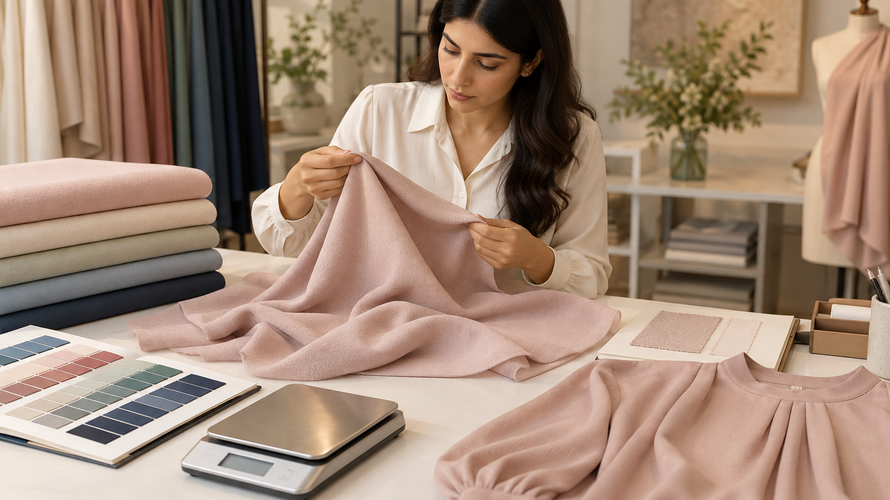
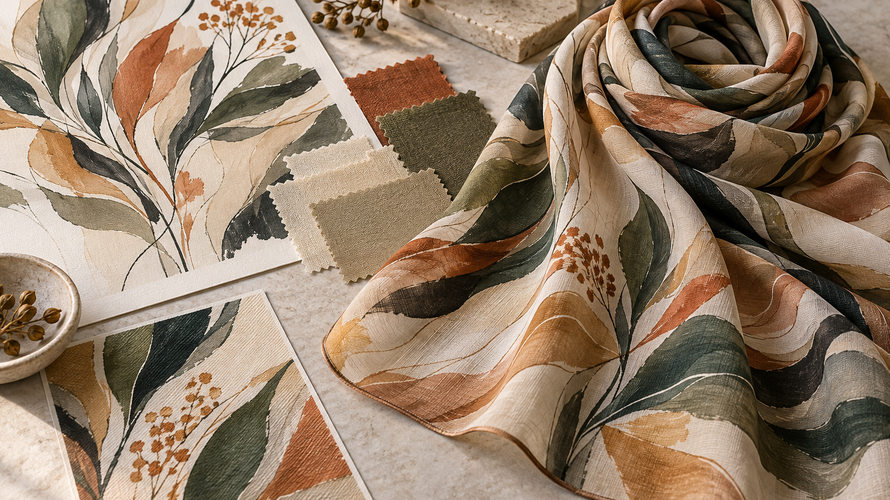
Crepe is used for scarves, dresses, blouses, skirts, linings, occasionwear and other products that need texture with controlled movement. For custom prints, keep the swatch and artwork sample together.
If the design needs a diagonal structure, compare twill with crepe rather than assuming both give the same body or drape.
How Should Crepe Fabric Be Specified?
State fibre, yarn twist, construction, weight, width, texture, opacity, face, reverse, colour, print, finish, shrinkage, care and tolerance.
For a scarf, define the finished dimensions, border, hem and printed or woven pattern route before approving production.
Frequently Asked Questions
What is crepe fabric?
Crepe is a fabric direction with a textured or pebbled surface created by yarn twist, construction, finishing or a combination of these.
Is crepe fabric made from silk?
It can be made from silk, but polyester, viscose and other fibres are also used. Confirm composition separately.
Is crepe fabric stretchy?
Stretch depends on fibre, knit or woven construction and any elastane. Crepe itself does not guarantee stretch.
Is crepe fabric good for scarves?
Crepe can suit scarves when its texture, weight, opacity, drape, print response and care meet the brief.
What is crepe de chine?
Crepe de chine is a light crepe direction commonly associated with a softly pebbled surface and drape. Exact hand varies by fibre and finish.
Does crepe shrink?
Shrinkage depends on fibre, yarn, construction and finishing. Test the exact finished quality before cutting.
What should a crepe buyer request?
Request composition, yarn and construction details, weight, width, texture, colour, care, dimensional data and a finished sample.
Conclusion
Crepe describes a textured fabric direction rather than one fibre. Specify the yarn, construction, weight, texture, width, finish and care route, then approve the actual sample after finishing before bulk production.
