
What Is Modal Silk Fabric? How the Label Differs from Silk

Carina Silk Editorial Team writes practical guides on silk fabrics, scarves and custom textile development, with a focus on materials, artwork, sampling, construction and finishing decisions.
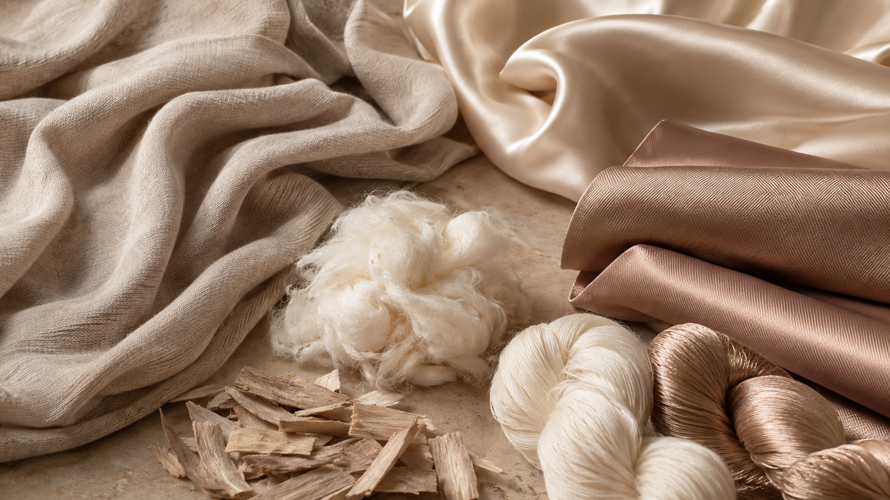
“Modal silk” is a confusing market phrase. Modal is a regenerated-cellulose fibre direction; silk is a natural protein fibre. The phrase may describe a modal fabric with a silk-like hand, a modal-silk blend or loose marketing language. It should not be treated as proof of silk content.
The safest approach is to read the fabric composition guide, verify the exact label wording and compare the finished fabric. The existing modal fabric guide covers the fibre family; this article focuses on distinguishing it from real silk.
What Does “Modal Silk” Mean?
Modal is a type of regenerated cellulosic fibre commonly used for soft, fluid fabrics. Silk is a natural protein fibre produced by silkworms. They are materially different even when a finished fabric looks smooth or feels soft.
A fabric marketed as modal silk may be a modal quality, a blend or a product name. The legally appropriate fibre declaration depends on the actual composition and market requirements.
A silk fabric type such as silk satin or silk twill should be identified by verified silk content and construction, not by a silk-like adjective.
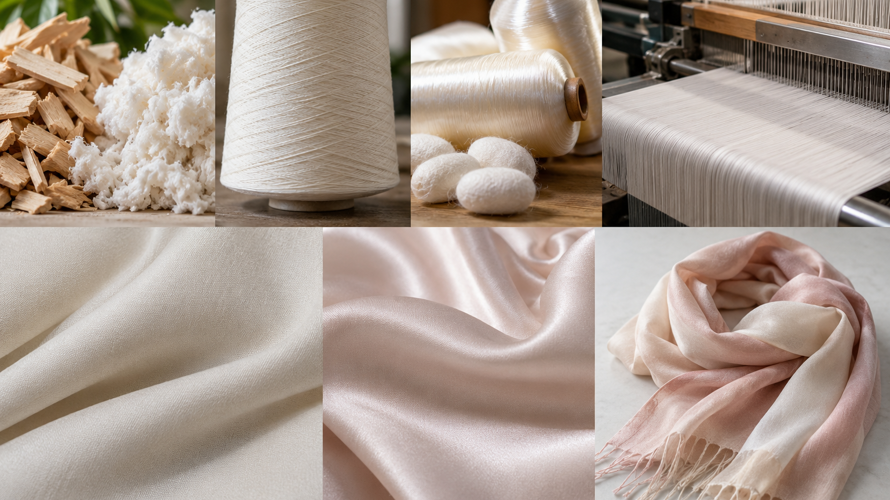
How Are Modal and Silk Fabrics Made?
Modal is produced by regenerating cellulose into fibre, then spinning or using it in yarn and fabric. Silk begins as a continuous natural filament that may be reeled, spun, woven or knitted.
Yarn, weave, weight, density, dyeing and finishing can make both materials appear fluid, smooth or lustrous. Surface similarity does not remove the need for composition verification.
For a scarf, compare modal and silk on the same finished swatch for drape, grip, opacity, print response, care and edge.
What Products May Be Called Modal Silk?
Use a precise material description instead of relying on the phrase alone.
| Direction | Textile character | Potential fit | What to confirm |
|---|---|---|---|
| 100% modal fabric | Regenerated-cellulose fibre direction | Soft everyday products | Exact fibre wording and care |
| Silk-modal blend | Two fibre families combined | Balanced hand or cost direction | Blend ratio and label |
| Silk-like modal | Modal with a smooth finish | Fluid fashion and scarves | Surface and composition |
| 100% silk satin | Silk fibre in satin construction | Luxury smooth products | Silk content and weave |
| Silk twill | Silk fibre in twill construction | Printed premium scarves | Silk type, weight and print |
| Marketing name only | No technical meaning by itself | Retail shorthand | Written composition and sample |
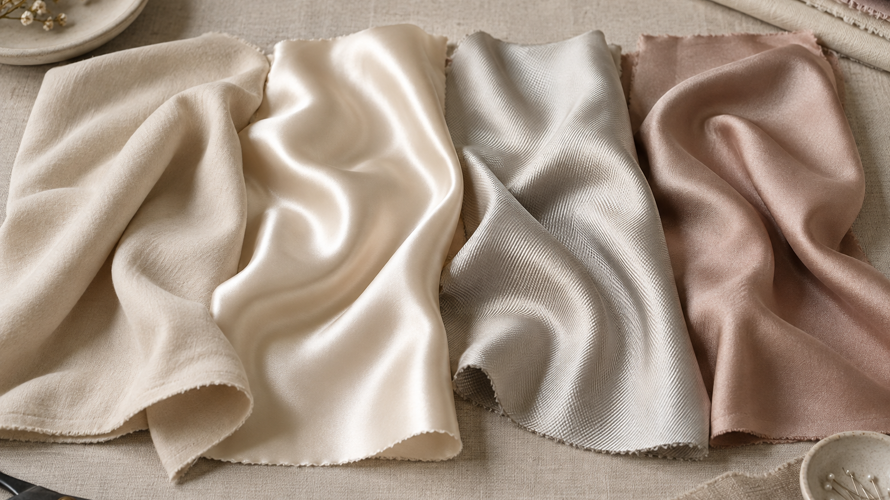
Modal Silk vs Real Silk
Modal and silk can overlap in softness or drape, but they differ in fibre origin, production route, care behaviour, price position and labelling. “Silky” describes an impression, not composition.
Compare modal with silk and silk twill using fibre content, weight, width, opacity, surface, print, grip and care.
If the product brief requires real silk, write silk content as a non-negotiable specification and approve a sample that matches it.
What Should Buyers Check When They See “Modal Silk”?
Treat the phrase as a prompt for verification, not as a material specification.
Composition
Confirm modal, silk and every other fibre percentage from the supplier documentation.
Label Wording
Use the applicable textile-label rules for the target market and avoid unsupported silk claims.
Construction
Record satin, twill, plain weave, knit, weight, width, density and finish.
Hand and Drape
Compare the actual product for softness, fluidity, grip, lustre and opacity.
Care and Stability
Test washing, pressing, shrinkage, colourfastness, pilling and dimensional behaviour.
Finished Claim
Approve the finished sample and keep the evidence that supports the final product description.
| Check | Why it matters | Possible risk | Evidence to request |
|---|---|---|---|
| Composition | Defines actual material | Modal sold as silk | Fibre statement |
| Blend ratio | Controls hand and claim | Unknown blend | Blend record |
| Construction | Controls surface | Silk-like finish confused with silk | Weave or knit details |
| Care | Controls use | Wrong instruction | Care trial |
| Label | Controls compliance | Unsupported wording | Approved label |
| Sample | Confirms result | Marketing image misleads | Finished swatch |

Where Are Modal and Silk Fabrics Used?
Modal is used in soft apparel, underwear, loungewear, linings and fluid products. Silk is used in premium scarves, apparel, accessories and products where its fibre and surface are required.
For a printed scarf, compare silk satin, silk twill and modal by artwork definition, slip, drape, opacity, edge and care.
Use a specific product description so the customer understands whether the item is modal, silk or a blend.
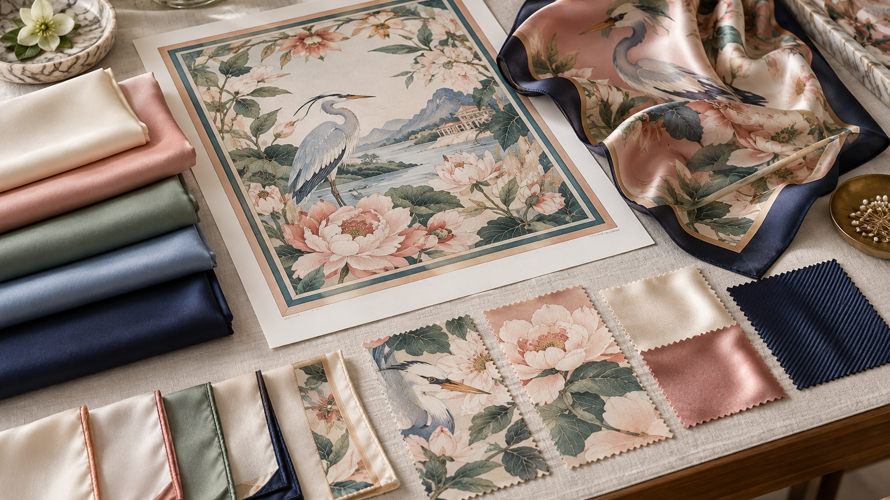
How Should Modal or Silk Fabric Be Specified?
State exact fibre content, blend percentage, construction, weight, width, finish, colour or print route, care, label wording and tolerances.
Attach a finished swatch and the supporting composition record. Do not let “modal silk” replace a fibre declaration.
Frequently Asked Questions
Is modal silk real silk?
Not necessarily. Modal is a regenerated-cellulose fibre direction, while silk is a natural protein fibre. Verify composition rather than relying on the phrase.
What is modal fabric?
Modal is a regenerated cellulosic fibre used in soft woven or knitted fabrics and blends.
Is modal as good as silk?
They serve different material and product directions. Compare the exact fabric by hand, drape, care, appearance, claims and use.
Does modal look like silk?
Some modal fabrics can have a smooth or fluid appearance, but a similar look does not prove silk content.
Can modal and silk be blended?
Yes. The blend ratio and finished construction should be stated and verified.
Which is better for a scarf, modal or silk?
Choose based on fibre requirement, hand, drape, grip, opacity, print, care, price and finished use.
What should a buyer request?
Request the fibre statement, blend ratio, construction, care instructions and a finished sample.
Conclusion
“Modal silk” is not a substitute for a verified fibre specification. Separate modal, silk and silk-like appearance, then approve the exact composition, construction, care and finished sample.
