Fiber vs Fabric: What’s the Difference in Textiles?

Carina Silk Editorial Team writes practical guides on silk fabrics, scarves and custom textile development, with a focus on materials, artwork, sampling, construction and finishing decisions.
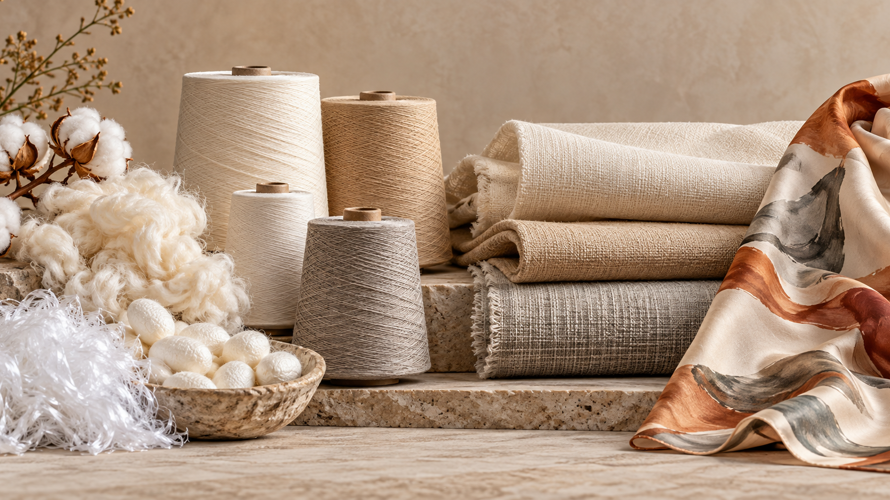
Fiber and fabric are different levels of a textile system. A fibre is a material unit that can be processed into yarn or directly into a textile structure; fabric is a flexible material held together by weaving, knitting, bonding or another construction route. The CottonWorks fibre reference and fabric definition are useful starting points.
For a buyer, the distinction prevents common specification errors. Silk identifies a fibre direction, while satin, twill, chiffon or plain weave identify construction or surface directions. A finished fabric still needs composition, construction, weight, width, finish and care.
What Is the Difference Between Fiber and Fabric?
A textile fibre is a fine, flexible material with a high length-to-diameter ratio and properties that allow it to be processed into textile products. Natural fibres include cotton, wool and silk; manufactured fibres include regenerated and synthetic families.
Fabric is made when fibres or yarns are held together through a construction system. Woven fabric uses intersecting yarn directions, while knits use loops and nonwovens may use bonding, entanglement or other methods.
A fibre name does not tell a buyer the weave, density, width, surface, weight or finished behaviour. Conversely, a construction name does not prove what the fibre is.

How Do Fibres Become Fabric?
The usual chain is fibre to yarn or filament, then yarn to fabric, followed by dyeing, printing, finishing and product assembly. Staple fibres are spun into yarn; filament fibres may be used as continuous yarns or cut into staple form.
Yarn size, twist, ply and tension affect the resulting fabric. The warp and weft guide explains why yarn direction and interlacement matter in woven qualities.
Finishing can change handle, lustre, softness, shrinkage and dimensional stability. Approve the finished swatch rather than treating an unfinished construction sample as the final product.
What Are the Main Levels of a Textile Specification?
Use a layered description so the supplier and buyer are discussing the same material at the same stage.
| Level | What it describes | Example | What to confirm |
|---|---|---|---|
| Fibre | Material identity | Silk, cotton, wool or polyester | Composition and percentage |
| Yarn | How fibre or filament is assembled | Spun, filament, plied or textured yarn | Count, twist and ply |
| Woven fabric | Warp and weft construction | Plain weave, twill or satin weave | Density, width and grain |
| Knitted fabric | Looped construction | Jersey or rib | Stretch and recovery |
| Nonwoven textile | Bonded or entangled structure | Felt or bonded sheet | Bonding and strength |
| Finished product | Fabric after processing and assembly | Printed scarf with hem | Colour, care and dimensions |
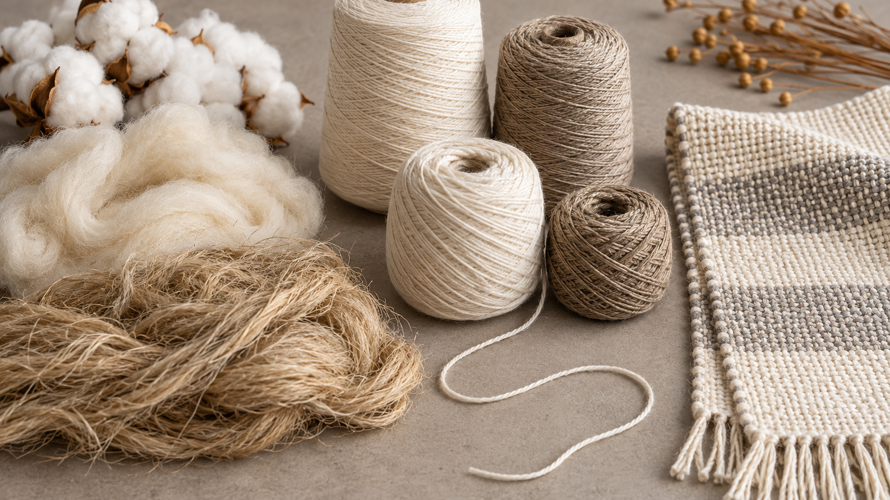
Fiber vs Fabric vs Textile: What Is the Difference?
Textile is the broadest term and can include fibres, yarns, fabrics, finished products and technical structures. Fiber is the material level; fabric is a constructed flexible material; a finished textile product adds processing, design and assembly.
A label such as “silk satin” combines a fibre with a construction. Satin is not automatically silk, and silk is not automatically satin. The same fibre can be made into twill, chiffon, plain weave or knit.
When a product claim matters, pair composition with the construction and use the applicable FTC textile-label guidance or EU textile-label guidance as a compliance reference.
What Should Buyers Check?
The safest specification moves from fibre identity to finished-product evidence.
Composition
State every fibre and percentage, including blends, coatings or added components that affect the claim.
Construction
Record woven, knitted, bonded or other structure and define the relevant yarn directions.
Weight and Width
Specify finished weight and usable width; the GSM guide explains why weight needs construction context.
Finish and Processing
Identify dyeing, printing, coating, brushing, softening, washing or other processes before approval.
Label and Claims
Match product wording to verified composition and avoid using a construction name as a fibre claim.
Finished Sample
Approve the actual product after printing, pressing, hemming and care testing when those steps are part of the order.
| Check | Why it matters | Possible risk | Evidence to request |
|---|---|---|---|
| Fibre | Defines material identity | Wrong label or claim | Composition statement |
| Yarn | Controls hand and strength | Unexpected surface | Yarn details |
| Construction | Controls drape and performance | Wrong fabric behaviour | Weave or knit record |
| Weight and width | Controls yield and use | Cost or coverage mismatch | Finished measurement |
| Finish | Controls final surface | Sample differs from bulk | Process record |
| Product sample | Confirms real outcome | Unverified approval | Retained reference |

Why Does Fiber vs Fabric Matter for Custom Products?
A custom scarf brief can require silk fibre, a particular weave, a target weight, a print route and a finished hem. None of those details should be replaced by a broad word such as textile.
For blended or synthetic products, compare the fabric composition guide with the finished construction and care route.
Clear terminology reduces sampling errors, improves costing and makes later quality checks repeatable.
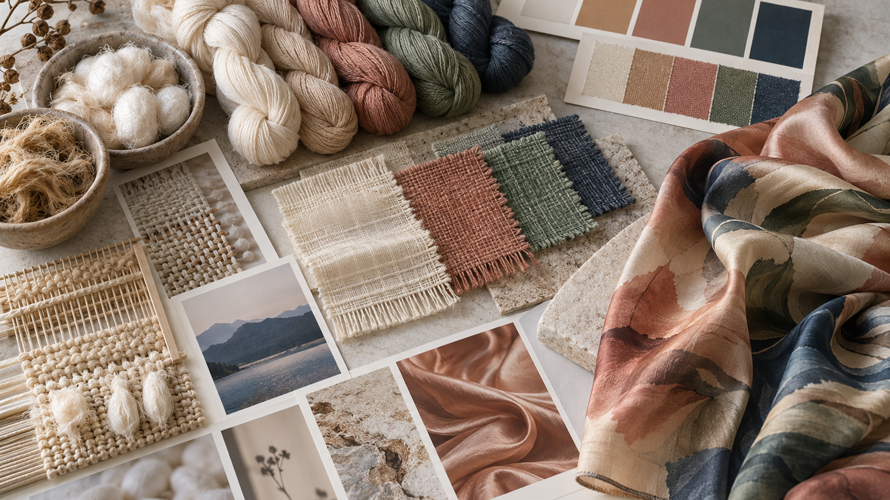
How Should Fiber and Fabric Be Specified?
State fibre content, yarn form, construction, weight, width, finish, colour or print route, care, tolerances and finished-product dimensions.
Attach a physical swatch and the intended label wording. The reference should represent the same finished stage that will be delivered.
Frequently Asked Questions
Is cotton a fibre or a fabric?
Cotton is a natural textile fibre. It can be processed into many fabrics, including woven, knitted and blended qualities.
Is silk a fabric or a fibre?
Silk is a natural protein fibre. Silk fabric can be woven or knitted into constructions such as satin, twill, chiffon and others.
What is fabric made from?
Fabric can be made from fibres or yarns held together by weaving, knitting, bonding, entanglement or another construction process.
Is textile the same as fabric?
No. Textile is a broader term that can include fibres, yarns, fabrics, finished products and technical structures.
Why does construction matter?
Construction controls many aspects of hand, drape, stretch, opacity, strength and print response, even when the fibre stays the same.
How should a buyer describe a fabric?
State fibre, yarn, construction, weight, width, finish, colour or print, care and finished dimensions.
Can one fibre make different fabrics?
Yes. The same fibre can be used in different yarns, weaves, knits, finishes and product formats.
Conclusion
Fiber identifies the material foundation; fabric identifies how that material is held together. A reliable textile specification includes both, then adds yarn, weight, width, finish, care and a finished reference sample.